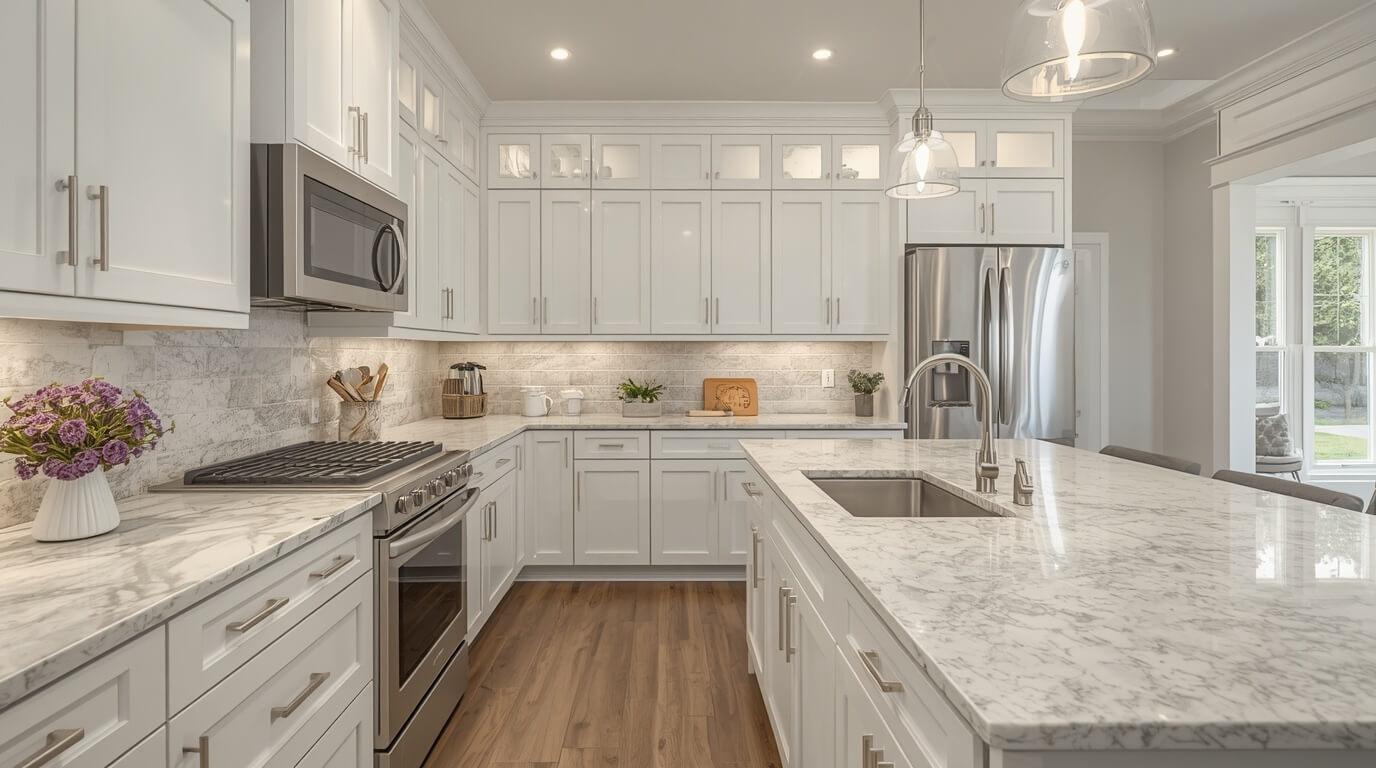
Dolomite sits between classic marble and tougher quartzites, offering crisp white backgrounds and subtle gray veining with a bit more scratch resistance than many marbles. Its elegant look has made it a favorite for kitchens seeking refinement without ostentation.
Properties & Performance
Dolomite is a carbonate rock rich in the mineral dolomite, which can improve hardness and reduce reactivity compared to pure calcite marbles. Still, it benefits from routine sealing and mindful use—especially with acids and abrasives.
Best Uses in Kitchens
- Islands with waterfall edges and mitered corners
- Backsplashes and niche shelves for visual continuity
- Integrated drainboards and shallow ledges for prep areas
- Honed finishes to minimize the look of micro‑scratches

Pros & Cons
Dolomite delivers the light, airy aesthetic many homeowners want, with better day‑to‑day resilience than softer marbles.
- Pros: refined aesthetics; generally denser than many marbles; refinishable
- Cons: still sensitive to acids; needs sealing; limited color range
Fabrication & Installation
Because edges can chip, request small arrises on exposed profiles. Confirm reinforcement at spans, sinks, and cooktops. Coordinate slab yield to minimize seams and maintain vein direction across vertical surfaces.
Care & Cleaning
Use pH‑neutral cleaners, reseal periodically, and rely on boards for chopping. Blot oils immediately. Professional honing can refresh high‑traffic zones over time.
Conclusion
For kitchens chasing quiet luxury, dolomite offers a poised, modern alternative to traditional marble.
Additional Installation & Care Tips
Tip: Always request a physical sample of the exact bundle or slab lot you plan to purchase; color veining and tone can vary significantly between shipments.
Tip: Confirm edge profiles early in the process (e.g., eased, beveled, bullnose, ogee). Complex edges may require additional fabrication time and cost.
Tip: Agree on seam placement and direction of veining during the templating stage. In spaces with strong natural light, seams should be positioned away from glare lines to remain discreet.
Tip: Ask your installer to document the sealant brand, solids content, and expected re-seal interval so you can match products during future maintenance.